

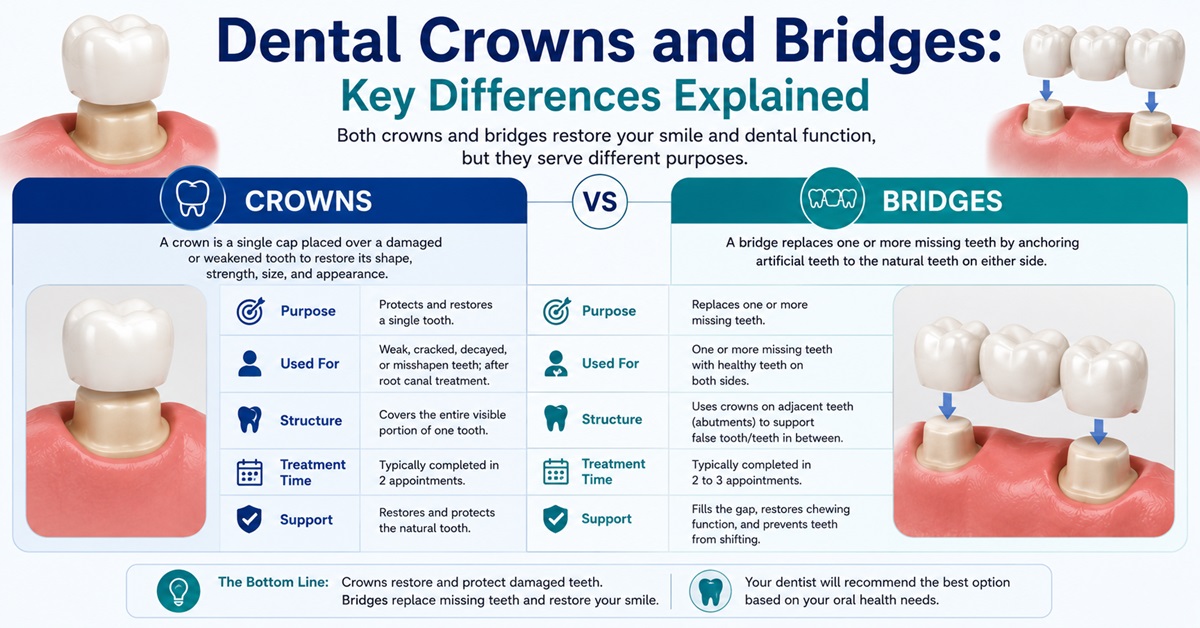
Dental Crowns and Bridges: Key Differences Explained
Missing teeth, damaged enamel, cracked teeth, and chewing discomfort can affect daily life in many ways. Patients often feel unsure about treatment choices when dentists mention crowns or bridges during an appointment. Questions about appearance, tooth preparation, durability, comfort, and long-term results are very common. Our team at Sunrise Dental works closely with patients to explain every option in simple language.
Patients searching for Dental Crowns in Peoria, AZ often want to learn how crowns restore damaged teeth and how bridges replace missing teeth. This guide explains the difference between dental crowns and bridges, how each treatment works, who may benefit from each option, and what patients can expect during treatment and recovery.
What Is a Dental Crown?
A dental crown is a custom tooth-shaped restoration that covers and protects a damaged tooth. Crowns restore strength, chewing ability, tooth shape, bite support, and smile appearance. Crowns are commonly created from porcelain, ceramic, zirconia, metal, or porcelain-fused materials.
Patients visiting for Dentistry Peoria AZ services often ask if crowns feel natural after placement. Modern crown materials closely match natural teeth, helping patients chew comfortably and smile with greater confidence.
Common Reasons Patients Need Dental Crowns
A crown may be recommended when a tooth becomes weak, cracked, worn, or heavily filled. Crowns help preserve natural tooth structure and reduce the risk of future fractures.
Common situations include:
- Large cavities that weaken the tooth
- Cracked or fractured teeth
- Severe tooth wear from grinding
- Root canal-treated teeth
- Broken dental fillings
- Cosmetic smile improvements
- Discolored or misshapen teeth
A crown acts like a protective cap over the remaining tooth structure. This added support helps improve stability during chewing and speaking.
What Is a Dental Bridge?
A dental bridge replaces one or more missing teeth. The bridge fills the empty gap using artificial teeth supported by neighboring teeth or dental implants.
A bridge usually contains:
- Supporting crowns on nearby teeth
- Artificial replacement teeth called pontics
- Cemented restorations for stability
Patients missing teeth often notice shifting teeth, bite imbalance, speech changes, gum irritation, and chewing difficulty. Bridges help restore function, smile appearance, and bite alignment.
Common Reasons Patients Need Dental Bridges
A missing tooth can create several oral health concerns over time. Nearby teeth may drift into the empty space, creating bite changes and uneven pressure.
A bridge may help patients experiencing:
- Missing teeth after extraction
- Difficulty chewing foods
- Gaps affecting smile appearance
- Speech changes
- Uneven bite pressure
- Tooth movement into empty spaces
- Jaw discomfort from bite imbalance
Many patients choose bridges to restore both appearance and oral function without removable appliances.
Dental Crowns and Bridges: Main Differences
Patients often hear the phrase crown and bridge dental treatment during restorative consultations. Crowns and bridges may appear similar, though each serves a different purpose.
Purpose of Treatment
A crown restores and protects a damaged natural tooth. A bridge replaces one or more missing teeth.
Crowns focus on tooth preservation. Bridges focus on tooth replacement.
Number of Teeth Involved
A crown covers one tooth.
A bridge usually spans multiple teeth, including support teeth and replacement teeth.
Tooth Structure
A crown strengthens an existing tooth.
A bridge replaces missing teeth by anchoring onto surrounding teeth or implants.
Treatment Goals
Crowns improve tooth durability, tooth protection, chewing strength, and smile appearance.
Bridges restore missing teeth, bite support, chewing balance, and speech function.
Oral Health Impact
Crowns protect weak teeth from larger fractures and damage.
Bridges help stop teeth from shifting into open spaces, which may reduce bite complications.
Dental Crown and Bridge Treatment Process
The dental crown and bridge process follows similar restorative steps. Both treatments involve tooth preparation, impressions, temporary restorations, and final placement.
Initial Examination
The dentist evaluates oral health, gums, surrounding teeth, bite alignment, and bone support. Digital X-rays help identify tooth decay, fractures, gum disease, or hidden infection.
Patients may discuss:
- Tooth pain
- Missing teeth
- Cosmetic concerns
- Tooth sensitivity
- Chewing discomfort
- Material preferences
- Treatment timelines
This stage helps create a treatment plan suited to the patient’s oral health needs.
Tooth Preparation
Local anesthesia numbs the area before treatment begins. The supporting teeth are reshaped to create space for crowns or bridge restorations.
Patients often worry about discomfort during preparation. Most patients feel pressure or vibration instead of sharp pain.
Impressions and Digital Scans
Digital scans or impressions record the shape of the teeth and bite. These measurements help create custom restorations that fit comfortably.
The dental laboratory focuses on:
- Bite alignment
- Tooth contour
- Color matching
- Gumline adaptation
- Crown shape
- Bridge stability
Temporary Restorations
Temporary crowns or bridges protect the prepared teeth until the permanent restoration is ready.
Patients are often advised to:
- Avoid sticky foods
- Avoid chewing hard candy
- Brush gently around temporary restorations
- Floss carefully
- Report looseness or discomfort
Permanent Placement
During the final visit, the dentist checks fit, bite pressure, appearance, and comfort before cementing the restoration.
Patients often notice improvements in:
- Smile appearance
- Chewing comfort
- Bite stability
- Tooth support
- Speech clarity
Which Option Is Better?
The right treatment depends on the patient’s oral condition and smile goals.
A crown may be recommended if:
- The tooth structure can still be saved
- The tooth root remains healthy
- The patient has a cracked or weak tooth
- Cosmetic improvement is desired
A bridge may be recommended if:
- One or more teeth are missing
- Nearby teeth need crowns
- The patient wants a fixed tooth replacement
- Bite balance needs restoration
Our dental team evaluates tooth structure, gum health, jaw alignment, and chewing function before recommending treatment.
Benefits of Dental Crowns
Crowns offer several restorative and cosmetic advantages.
Tooth Protection
Crowns help protect weak teeth from additional cracking or wear.
Improved Appearance
Porcelain and ceramic crowns blend closely with surrounding teeth.
Better Chewing Support
Patients often regain stronger chewing ability after crown placement.
Long Lasting Durability
With proper care, crowns may last many years.
Benefits of Dental Bridges
Bridges restore missing teeth and improve oral function.
Restored Smile Appearance
Bridges fill visible tooth gaps and improve smile balance.
Better Bite Alignment
Replacing missing teeth helps support even bite pressure.
Improved Speech
Tooth gaps may affect pronunciation. Bridges help restore speech clarity.
Reduced Tooth Shifting
Bridges help prevent neighboring teeth from drifting into empty spaces.
How Long Do Crowns and Bridges Last?
Crowns and bridges can last many years with proper oral hygiene and routine dental care.
Patients can help protect restorations through:
- Daily brushing
- Daily flossing
- Routine dental cleanings
- Limiting hard foods
- Wearing a night guard for grinding
- Avoiding ice chewing
- Avoiding nail biting
Strong gum health and consistent hygiene support long-term restoration success.
Common Concerns Patients Have
Will the Treatment Hurt?
Most patients experience very little discomfort during treatment. Local anesthesia helps numb the treatment area.
Will the Crown or Bridge Look Natural?
Modern ceramic and porcelain materials closely match natural teeth.
How Long Is Recovery?
Most patients return to normal activities shortly after appointments. Mild soreness or sensitivity may occur for several days.
Can Patients Eat Normally Again?
Many patients notice improved chewing comfort after treatment. Hard foods should still be approached carefully.
Tips for Maintaining Crowns and Bridges
Healthy habits help protect both restorations and natural teeth.
Maintain Oral Hygiene
Brush twice daily and floss carefully around the restoration margins.
Attend Routine Dental Visits
Regular checkups help identify wear, gum irritation, bite changes, or hidden decay.
Protect Teeth From Grinding
Grinding pressure can damage restorations over time. Night guards help reduce excessive force.
Avoid Damaging Habits
Chewing ice, opening packages with teeth, and biting hard objects may increase restoration damage risk.
Final Thoughts
Learning the difference between dental crowns and bridges helps patients feel more confident during treatment planning. Crowns restore damaged teeth and protect natural tooth structure. Bridges replace missing teeth and restore bite balance, chewing support, and smile appearance.
Our team at Sunrise Dental focuses on creating a calm, supportive experience where patients feel informed during every stage of care. Modern restorative dentistry offers strong, natural-looking solutions that improve comfort, oral health, and smile confidence.
Patients experiencing tooth damage, missing teeth, chewing problems, or smile concerns should schedule a consultation for personalized treatment recommendations. Our team is ready to help patients restore healthy smiles with high-quality restorative care and long-lasting results.