

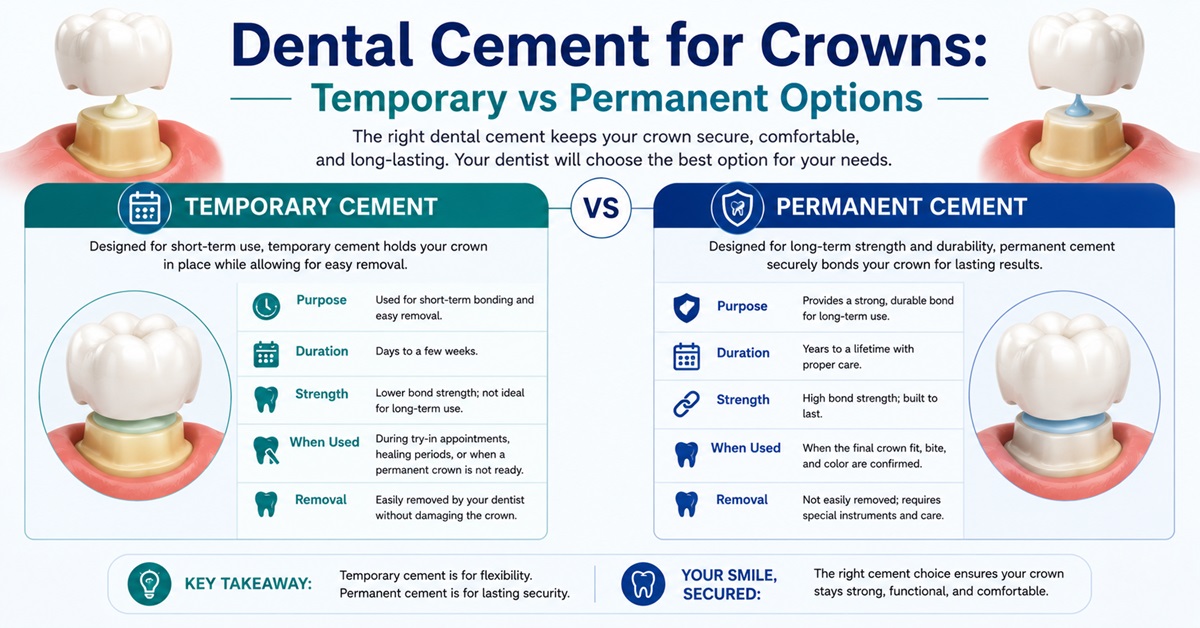
Dental Cement for Crowns: Temporary vs Permanent Options
A loose crown, tooth sensitivity, chewing discomfort, or a crown that suddenly falls out can create stress for many patients. Questions about crown stability, dental adhesives, crown placement, and long term tooth protection often come up during dental visits. Our team at Sunrise Dental focuses on helping patients feel informed and comfortable during every stage of crown treatment.
Patients searching for Dental Crowns in Peoria, AZ, often ask about the role of dental cement for crowns and why some crowns use temporary cement while others use permanent bonding materials. This guide explains the purpose of crown cement, the difference between temporary and permanent options, how dentists choose materials, and what patients can expect after treatment.
What Is Dental Cement for Crowns?
Dental cement for crown placement is a special bonding material used to secure a crown onto a prepared tooth. The cement creates a tight seal between the tooth and the restoration, helping improve stability, protection, and chewing function.
Patients visiting a Dentist Peoria AZ, office often ask if dental cement acts like glue. Dental cement works differently from household adhesives. Crown cement is created for oral use and helps support crown retention, bite pressure, tooth protection, and gum health.
Main Purposes of Dental Cement
Dental cement supports both tooth function and restoration security.
The cement helps:
- Hold the crown firmly in place
- Reduce crown movement
- Seal gaps between the crown and tooth
- Reduce bacteria buildup near the tooth structure
- Improve bite stability during chewing
- Protect sensitive tooth surfaces
Strong crown bonding supports long term oral health and restoration success.
Temporary vs Permanent Dental Cement
Patients often hear about temporary dental cement for crowns and permanent dental cement for crowns during treatment discussions. Each type serves a different purpose depending on the stage of treatment.
Temporary Dental Cement for Crowns
Temporary dental cement for crowns is used when a patient receives a temporary crown during the waiting period before the final restoration is ready.
Temporary crowns protect the prepared tooth and help patients chew more comfortably until the permanent crown is placed.
Why Dentists Use Temporary Cement
Temporary cement allows dentists to remove the temporary crown easily during the next appointment.
This type of cement supports:
- Short-term crown retention
- Tooth sensitivity reduction
- Temporary chewing support
- Gum tissue protection
- Easy crown removal
Temporary materials create enough hold for daily use without making removal difficult.
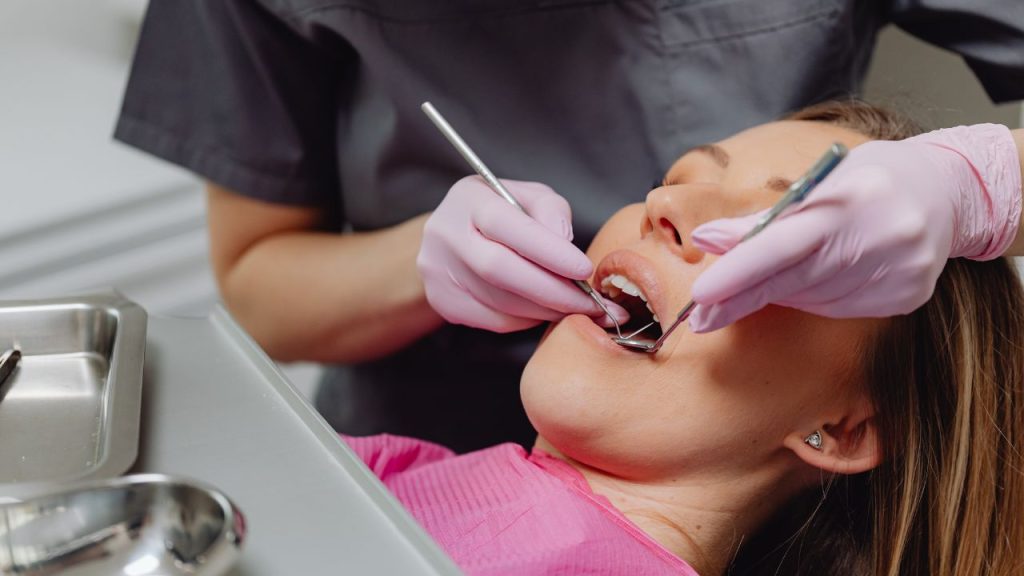
What Patients Should Expect With Temporary Crowns
Temporary crowns may feel slightly different from permanent restorations. Mild sensitivity or pressure changes can happen during this phase.
Patients are often advised to:
- Avoid sticky foods
- Avoid chewing hard candy
- Brush gently around the crown
- Floss carefully
- Report looseness quickly
A temporary crown is not created for long-term use. Good care habits help reduce crown movement or accidental loss.
Permanent Dental Cement for Crowns
Permanent dental cement for crowns is used during the final crown placement appointment. This bonding material creates a much stronger seal between the tooth and the crown.
Permanent crown cement supports:
- Long-term crown retention
- Bite pressure resistance
- Tooth stability
- Reduced crown shifting
- Better chewing support
- Stronger restoration durability
Once the permanent crown is placed, patients usually notice improved bite strength and greater chewing comfort.
Types of Permanent Crown Cement
Different cement materials may be selected based on crown type, tooth location, and oral health needs.
Common options include:
Resin Cement
Resin cement creates strong bonding strength and is often used for ceramic or porcelain restorations.
Glass Ionomer Cement
This cement releases fluoride and supports tooth protection around the crown margins.
Resin Modified Glass Ionomer
This option combines fluoride release with stronger bonding support.
The dentist selects the cement type based on crown material, tooth condition, bite force, and long-term support needs.
Temporary Cement for Dental Crown Placement
The phrase temporary cement for dental crown treatment refers to the short-term bonding stage before final crown delivery.
Patients often feel nervous when temporary crowns loosen or feel different. Small movements can happen occasionally with temporary restorations.
Common causes of temporary crown loosening include:
- Sticky foods
- Hard chewing pressure
- Tooth grinding
- Flossing aggressively
- Weak temporary bonding
Patients should contact the dental office if the temporary crown falls out or causes discomfort.
How Dentists Choose Crown Cement?
Several factors help determine which cement material fits the patient’s needs.
Crown Material
Porcelain, zirconia, metal, and ceramic crowns may require different bonding materials.
Tooth Location
Back teeth handle stronger chewing pressure than front teeth.
Bite Force
Patients with grinding habits often need stronger bonding support.
Tooth Condition
Teeth with limited structure may require stronger cement retention.
Moisture Control
Dry working conditions help improve cement bonding during placement.
Every patient has different oral health conditions, chewing habits, and restoration goals.
Common Patient Concerns About Crown Cement
Can Crown Cement Wear Out?
Cement can weaken over time from chewing pressure, grinding, decay, or aging restorations.
Signs of weakening cement may include:
- Crown movement
- Sensitivity
- Food trapping
- Bite discomfort
- Crown looseness
Routine dental visits help monitor crown stability.
Is It Normal for a Crown to Feel Different at First?
A newly cemented crown may feel slightly unusual during the adjustment period. Most patients adapt within several days.
Can a Crown Fall Off?
Crowns can loosen if the cement weakens or if decay develops beneath the restoration.
Patients should avoid trying to glue crowns back at home with household products.
Does Crown Cement Protect the Tooth?
Yes. Dental cement helps seal the tooth and reduce exposure to bacteria and food particles.
Tips for Protecting Crown Cement
Healthy oral habits help protect both the crown and the supporting tooth.
Maintain Daily Oral Hygiene
Brush twice daily and floss carefully around crown margins to reduce plaque buildup.
Avoid Hard Foods
Ice, hard candy, popcorn kernels, and pen chewing may increase crown stress.
Wear a Night Guard if Needed
Patients who grind their teeth during sleep may benefit from a custom night guard.
Attend Routine Dental Checkups
Regular dental visits help identify crown wear, cement weakening, gum irritation, and bite changes.
Report Crown Changes Quickly
Loose crowns, bite discomfort, or sensitivity should be evaluated before larger problems develop.
Benefits of Proper Crown Cementation
Strong crown bonding supports many parts of oral function and smile restoration.
Patients often experience:
- Improved chewing support
- Better bite stability
- Reduced sensitivity
- Greater crown durability
- Better smile appearance
- Improved speech comfort
- Reduced restoration movement
Modern cement materials help support long-lasting restorative treatment.
What Happens During Crown Cementation?
Patients often feel calmer when they understand the placement process.
During permanent crown placement, the dentist:
- Removes the temporary crown
- Cleans the tooth surface
- Checks crown fit and bite alignment
- Applies dental cement
- Places the crown carefully
- Removes extra cement
- Evaluates bite pressure
The final result is a stable restoration designed for daily chewing and speaking.
Final Thoughts
Learning the difference between temporary and permanent crown cement helps patients feel more confident during restorative treatment. Dental cement for crowns plays a major role in crown stability, tooth protection, bite support, and long-term oral health.
Our team at Sunrise Dental works hard to create a comfortable experience where patients feel informed during every stage of treatment. Proper crown placement and high-quality cement materials help support strong, functional, and natural-looking smiles.
Patients experiencing loose crowns, tooth sensitivity, crown movement, or chewing discomfort should schedule a consultation for personalized care. Our team is ready to evaluate crown condition, answer treatment questions, and help restore healthy smiles with reliable restorative dentistry solutions.