

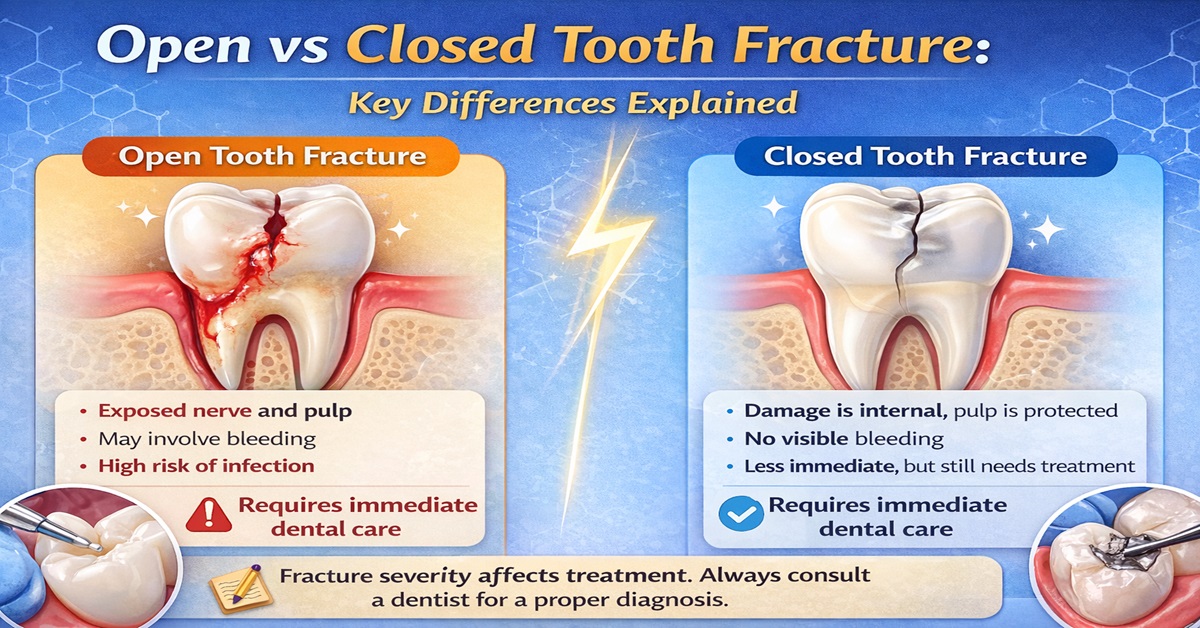
Open vs Closed Tooth Fracture: Key Differences Explained
Many patients feel worried after biting something hard or experiencing sudden tooth pain. A cracked or broken tooth can create confusion about how serious the damage is. At Sunrise Dental, patients often ask about open vs closed tooth fracture and what it means for their oral health.
Patients exploring treatments like Restorative Dentistry in Peoria, AZ often want to know how fractures affect tooth structure and what steps can restore strength and comfort. Understanding the difference between fracture types helps patients act quickly and avoid further damage.
What Is a Tooth Fracture?
Understanding Tooth Damage
A tooth fracture refers to a crack, break, or split in the tooth structure. This can involve enamel, dentin, or even the inner pulp, depending on severity.
When discussing open vs closed fracture of tooth, the key difference lies in whether the inner pulp is exposed. This distinction affects pain levels, infection risk, and treatment approach.
Recognizing early signs can help protect the tooth and prevent complications.
Open vs Closed Tooth Fracture
Key Differences Explained
Understanding open vs closed tooth fracture helps patients identify the seriousness of their condition.
Open Tooth Fracture
- The fracture exposes the inner pulp of the tooth
- Nerves and blood vessels become vulnerable
- Pain is often sharp and intense
- Higher risk of infection and sensitivity
Closed Tooth Fracture
- The crack does not expose the pulp
- Damage remains within outer layers of the tooth
- Pain may be mild or triggered by pressure
- Lower immediate risk of infection
Patients visiting a Dentist in Peoria AZ, often receive a thorough evaluation to determine the type of fracture and the best treatment plan.

Causes of Tooth Fractures
Why Teeth Break or Crack
Both types of fractures can occur from common daily activities or unexpected events.
- Biting hard foods like ice or nuts
- Accidental trauma or injury
- Teeth grinding or clenching
- Large fillings weakening tooth structure
- Sudden temperature changes in the mouth
These factors can weaken enamel and increase the risk of fractures over time.
Pain Points Patients Experience
Physical and Emotional Concerns
Patients dealing with a fractured tooth often face discomfort and uncertainty.
- Sudden pain when biting or chewing
- Sensitivity to hot or cold foods
- Fear of losing the tooth
- Difficulty eating or speaking normally
These concerns often lead patients to search for answers about open vs closed fracture of tooth and how serious their condition might be.
Symptoms to Watch For
Signs of Open and Closed Fractures
Recognizing symptoms early can help patients seek timely care.
Open Fracture Symptoms
- Severe and constant pain
- Visible break or missing part of the tooth
- Swelling around the affected area
- Possible signs of infection
Closed Fracture Symptoms
- Intermittent pain when chewing
- Sensitivity to temperature changes
- No visible pulp exposure
- Minor discomfort that comes and goes
Monitoring these signs helps patients understand when professional care is needed.
Treatment Options
Restoring Tooth Strength and Function
Treatment depends on the type and severity of the fracture.
For Closed Tooth Fracture
- Dental bonding to repair minor cracks
- Crowns to protect and strengthen the tooth
- Monitoring if the crack is small and stable
For Open Tooth Fracture
- Root canal treatment to remove infected pulp
- Crown placement to restore structure
- Extraction in severe cases if the tooth cannot be saved
Early treatment improves outcomes and reduces the risk of complications.
Preventative Strategies
Protecting Teeth from Future Damage
Patients can reduce the risk of fractures by adopting simple habits.
- Avoid biting hard objects such as ice or pens
- Wear a mouthguard during sports activities
- Address teeth grinding with protective appliances
- Maintain regular dental visits for early detection
These steps support long term tooth strength and stability.
When to Seek Immediate Care?
Signs That Require Urgent Attention
Patients should contact a dental professional if they notice:
- Severe or persistent pain
- Visible cracks or broken pieces
- Swelling or signs of infection
- Difficulty chewing or speaking
Prompt care helps preserve the tooth and prevent further damage.
Conclusion
Understanding open vs closed tooth fracture helps patients take the right steps when dental injury occurs. Open fractures involve more serious damage and a higher risk, while closed fractures may seem mild yet still require attention.
At Sunrise Dental, patient care focuses on early diagnosis and effective treatment to restore comfort and function. Our team supports each patient with guidance and personalized solutions.
Patients ready to protect their smile can schedule an appointment, request a consultation, or learn more about available services. Taking this step supports long-term oral health and confidence.