

Tooth Extraction vs Root Canal: What Dentists Recommend
A damaged or infected tooth can leave patients feeling worried, uncomfortable, and unsure about what to do next. One of the most common questions asked in dental offices is whether a tooth should be saved with a root canal or removed through extraction. When discussing tooth extraction vs root canal, many patients want the option that provides lasting oral health, comfort, and value.
Patients seeking Root Canal Therapy in Peoria, AZ often arrive with concerns about pain, treatment time, recovery, and future dental health. Both procedures can solve serious dental problems, yet they serve different purposes. The right choice depends on the condition of the tooth, the surrounding bone, the level of infection, and long-term treatment goals.
At Sunrise Dental, our focus is helping patients make informed decisions that support healthy smiles. Saving a natural tooth is often the preferred option when possible, though extraction may be recommended in certain situations.
When meeting with a Dentist Peoria AZ, patients frequently learn that preserving a natural tooth offers benefits that artificial replacements cannot fully duplicate. Each case is unique, which is why a professional evaluation is valuable before making a final decision.
Understanding the Difference Between a Root Canal and Tooth Extraction
Before comparing treatment recommendations, it helps to understand what each procedure involves.
What Is a Root Canal?
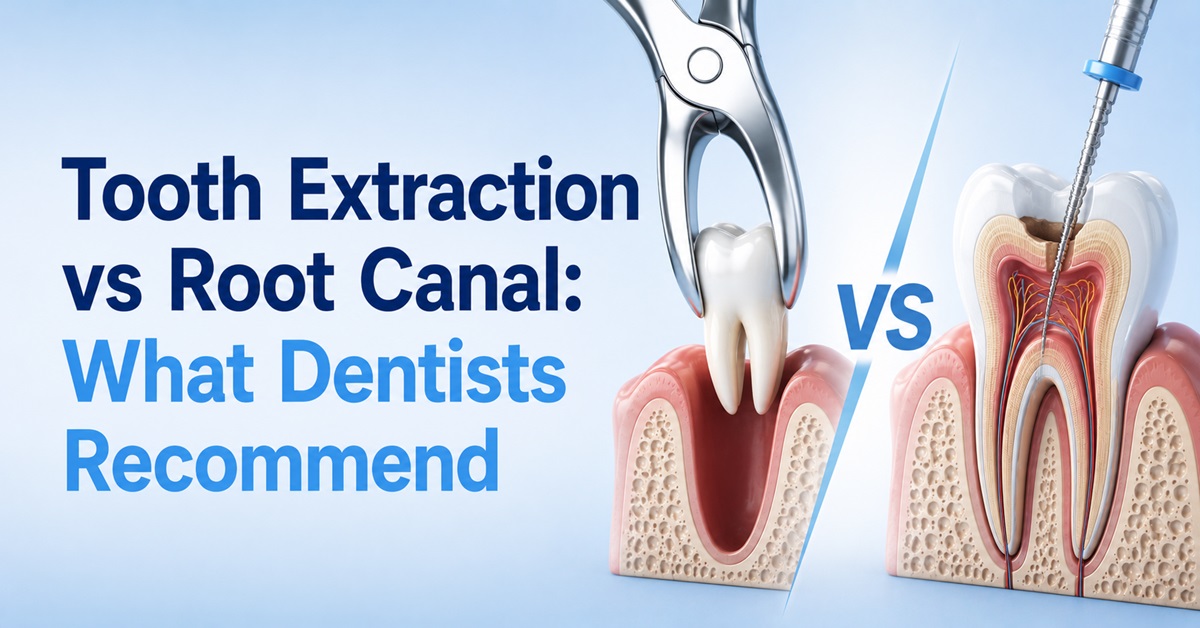
A root canal is a treatment used to save a tooth that has infected or damaged pulp inside the root structure.
During treatment, the dentist:
- Removes infected tissue from inside the tooth.
- Cleans and disinfects the root canals.
- Seals the canals to help prevent future infection.
- Restores the tooth with a filling or crown when needed.
The goal is to keep the natural tooth functioning properly.
What Is a Tooth Extraction?
A tooth extraction removes the entire tooth from its socket.
The procedure may be recommended when:
- The tooth is severely damaged.
- Large fractures extend below the gumline.
- Bone support has been lost.
- Infection has caused extensive destruction.
- Restorative treatment is no longer predictable.
Once removed, replacement options may include a dental implant, bridge, or partial denture.
Root Canal vs Extraction: Why Saving the Natural Tooth Is Often Preferred
The discussion around root canal vs extraction often begins with one major principle in dentistry.
Whenever possible, preserving a natural tooth is usually the preferred choice.
Natural teeth provide advantages that support both function and oral health.
Natural Chewing Function
A healthy natural tooth allows proper chewing force and bite balance.
Benefits include:
- Better chewing efficiency during meals.
- More natural bite alignment.
- Stable pressure distribution throughout the mouth.
- Reduced strain on neighbouring teeth.
These factors contribute to long-term oral function.
Preservation of Jawbone Structure
When a tooth remains in place, stimulation from chewing helps maintain bone levels.
A root canal can help preserve:
- Jawbone density.
- Facial structure support.
- Gum tissue stability.
- Natural oral architecture.
Extraction may lead to gradual bone shrinkage if the missing tooth is not replaced.
Reduced Tooth Movement
Teeth work together as a connected system.
When a tooth is removed:
- Nearby teeth may shift.
- Bite changes can occur.
- Spacing issues may develop.
- Cleaning may become more challenging.
Saving the natural tooth helps maintain alignment and stability.

Tooth Root Canal vs Extraction: Comparing Treatment Benefits
The conversation surrounding tooth root canal vs extraction often focuses on long-term outcomes.
Benefits of Root Canal Treatment
Root canal therapy offers several advantages.
- Preservation of the natural tooth structure allows patients to continue using their own tooth for chewing and speaking.
- Treatment removes infection while keeping the tooth in place, helping maintain bite stability and jaw function.
- Recovery is often straightforward, allowing patients to return to normal activities quickly.
- Modern dental techniques make treatment comfortable for most patients.
Benefits of Tooth Extraction
Extraction can still be a valuable treatment in certain situations.
- Removal eliminates severely damaged teeth that cannot be restored successfully.
- Serious infections affecting surrounding structures may require extraction when tooth preservation is no longer predictable.
- Extraction may reduce future complications involving teeth with extensive structural breakdown.
- For some patients, extraction followed by tooth replacement may provide the most practical solution.
When Dentists Usually Recommend a Root Canal
Dentists frequently recommend root canal treatment when the tooth can still be restored successfully.
Common situations include:
Deep Decay
A cavity that reaches the pulp may create infection and inflammation.
If enough healthy tooth structure remains, a root canal may save the tooth.
Dental Trauma
Cracks, injuries, and impact damage can affect the nerve tissue inside the tooth.
Treatment may preserve the tooth and prevent extraction.
Severe Sensitivity
Persistent sensitivity to hot or cold temperatures may indicate pulp damage.
Root canal treatment can remove the source of discomfort.
Tooth Abscess
An abscess may form near the root tip when infection develops.
Many abscessed teeth can be treated successfully through root canal therapy.
When Dentists May Recommend Extraction
There are situations where extraction becomes the more predictable option.
Severe Structural Damage
If too much tooth structure has been lost, restoration may not be possible.
Examples include:
- Large fractures below the gumline.
- Extensive decay affecting multiple surfaces.
- Significant structural collapse.
Advanced Gum Disease
Periodontal disease can weaken bone support around the tooth.
When stability is severely compromised, extraction may be necessary.
Non-Restorable Teeth
Some teeth simply cannot support a filling, crown, or restoration after treatment.
Removing the tooth may prevent ongoing problems.
Pain Concerns: Which Procedure Hurts More?
Many patients focus heavily on discomfort when comparing tooth extraction vs root canal.
Modern dentistry has improved comfort for both treatments.
Patients are typically numb during either procedure.
A root canal often removes the source of existing tooth pain.
Extraction may involve soreness during healing as the socket recovers.
Actual experiences vary from patient to patient, though many people are surprised by how manageable both procedures feel with current treatment methods.
Cost Considerations
Patients often compare immediate costs without looking at future expenses.
A root canal may initially seem more expensive than extraction.
Yet extraction can create additional costs if replacement treatment becomes necessary.
Potential replacement options include:
- Dental implants.
- Dental bridges.
- Partial dentures.
When these future treatments are considered, saving a tooth may provide strong long term value.
Tips for Making the Right Decision
Patients facing this choice can benefit from several practical steps.
Schedule an Evaluation Early
Prompt treatment can prevent additional damage and expand available options.
Ask Questions
Patients should understand:
- The condition of the tooth.
- Available treatment options.
- Expected outcomes.
- Long-term maintenance needs.
Consider Future Oral Health
The best choice is not always the fastest choice.
Long-term function, comfort, stability, and tooth preservation should all be part of the decision process.
Follow Recommended Care
Daily brushing, flossing, routine examinations, and professional cleanings support healthy teeth and reduce the likelihood of future infections.
What Dentists Recommend Most Often?
When comparing root canal vs extraction, many dentists recommend saving the natural tooth whenever restoration is predictable and successful treatment is achievable.
Natural teeth support chewing efficiency, jawbone preservation, bite stability, and long-term oral function. Root canal therapy often allows patients to keep these benefits while eliminating infection and discomfort.
Extraction remains an excellent treatment when a tooth cannot be restored effectively. The recommendation depends on the health of the tooth, surrounding structures, and the patient’s long-term goals.
Schedule a Consultation Today
Choosing between a root canal and extraction can feel overwhelming, especially when pain or infection is involved. Our team is committed to helping patients understand every option and feel comfortable with their treatment decisions. Contact Sunrise Dental today to schedule a consultation, receive a personalized evaluation, and learn which solution is best for protecting your smile, oral health, and long-term comfort.